

Do not ride or be carried on a motorbike until your doctor agrees that you can wear a proper helmet. A motorbike helmet after a hair transplant can press on and rub grafts that are still healing, but riding without one is never the answer, so the safe choice is to travel another way for now.
Why a helmet is hard on new grafts
A helmet that protects you must be snug. The UK government’s SHARP fitting guide says you should feel it against the whole of your head, and that it should not shift or slip. Your scalp is held in that grip. Each time it goes on or comes off, the lining slides across skin.
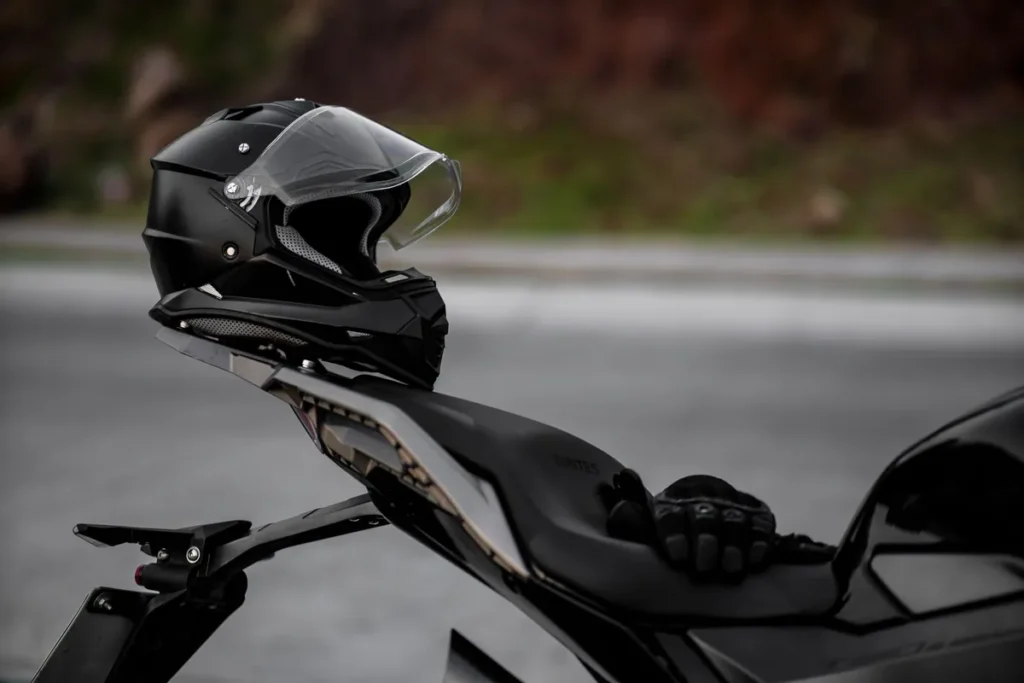
Early on, grafts do not resist force well. In a small study of 42 patients, pulling a hair always dislodged the graft in the first two days, and by day six it did not. Scabs extended the period, and the authors judged grafts no longer at risk of being pulled out by day nine. But that was pulling by hand. It did not test helmets, sweat or an hour in traffic. The NHS asks for great care for the first two weeks, when the grafts are not secure.
A loose helmet is not a compromise. SHARP warns that a helmet that comes off in the shop could come off in a crash. Do not remove the lining, slip in extra padding or leave the strap open.
Grafts, donor area and beard
Think about every place the helmet touches:
| Area | What the helmet does | Why ask the doctor |
|---|---|---|
| Hairline and crown grafts | Presses, then drags when taken off | Grafts and scabs can be disturbed |
| Donor area at the back and sides | Grips it on every ride | Small wounds and tender skin need time |
| Forehead and eyelids | Presses where fluid can collect | Fit may be wrong until swelling settles |
| Beard grafts | Cheek pads and chin strap press on them | An open-face helmet still has a strap |
| Eyebrow grafts | The lining or visor edge can catch | Ask before pulling anything over them |
The donor area heals at its own pace. An ISHRS journal article says many patients report three to five days before the small FUE wounds close over, but closed is not the same as strong.
Cleanliness counts too. Excessive sweating and contaminated headwear are listed as risk factors for infected follicles after a transplant. A shared spare helmet is a poor match for healing skin.
What does Thai helmet law say?
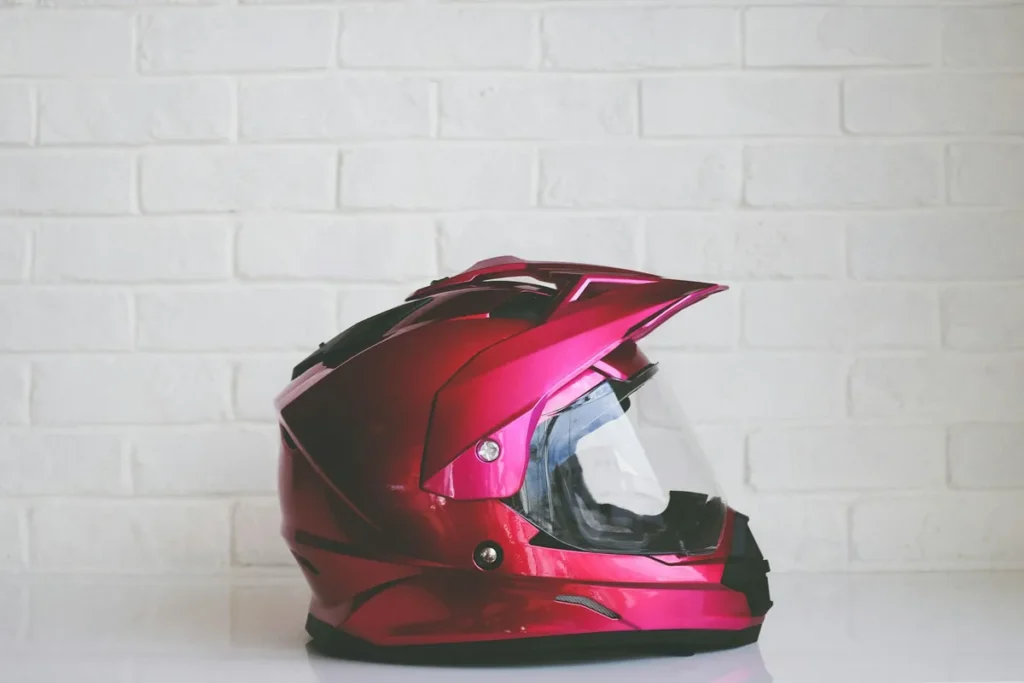
Section 122 of the Land Traffic Act requires both rider and passenger to wear a helmet, as the head of the traffic police has put it. Canada tells its travellers that helmets are mandatory for riders and passengers, and British advice says you must wear one by law. Do not assume that recent surgery makes you exempt, or that a short trip down a quiet soi does not count.
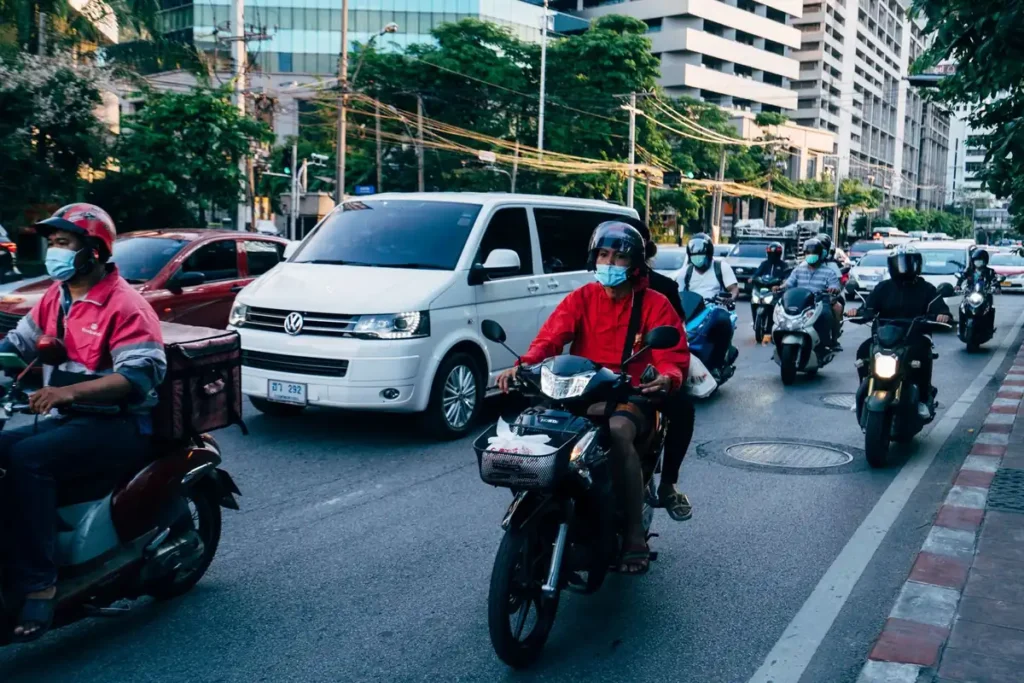
There is good reason for it. The World Health Organization says good helmets reduce the risk of death by over six times and brain injury by up to 74%. The CDC goes further: it advises travellers to Thailand to avoid motorbikes, including motorbike taxis. No graft is worth a head injury.
Insurance is another point. Irish travel advice warns that you may not be covered after an accident without a helmet, and Canada warns that claims could be denied if you have no motorcycle licence. Check your policy before any hire.
Getting around without Grab bikes or a scooter
Change the booking, not the helmet:
- In the Grab app, choose a car or taxi, and watch your head on the door frame. Grab lists both, as well as GrabBike, so check the icon before you confirm.
- Trains. Use the BTS or MRT where it suits, and avoid rush hour if you can, because crowds bump heads.
- The last part of the journey. Take a car from the station, or a slow walk in the shade, and not the motorbike taxi.
In a car, sit where there is a working seat belt and wear it. Canada warns that many taxis may have none in the back, so look before you set off. A headrest can press on the donor area. Sit upright, ask the driver to go gently, and do not fall asleep against it.
Residents can plan ahead. Work out the commute and the school gate before your date, and ask for some days at home. If you ride for a living, say so when you enquire.

When the doctor says you can ride
We found no agreed number of days. Two weeks is a reason to ask, not permission. The doctor may want to see that scabs are gone, skin is closed, swelling is down and nothing looks infected. After a yes, use your own clean helmet in the right size and keep the first rides short. Take it off slowly, check the scalp, and stop riding if anything hurts or bleeds.
A loose hat is a separate question with a separate answer. See recovery and the travel checklist.
When to call the clinic
Call the same day if a helmet has been forced on, dragged or knocked against the treated skin, or if you see fresh bleeding, a gap where grafts seem to be missing, spreading redness, pus, fever or pain that is getting worse. Press gently with clean gauze if it bleeds, and see a doctor at once if that does not stop it.
After any crash or blow to the head, emergency care comes first. The NHS says to call an ambulance at once for a high-speed impact such as a road accident, or for someone who cannot stay awake, has a fit, new weakness or numbness, trouble walking, speaking or seeing, or clear fluid from the nose or ears. Go whatever the grafts look like, and tell the staff about your surgery.
Common questions
Can I take a motorbike taxi for five minutes if I just hold the helmet?
No. You would be unprotected and breaking the law, and a short ride is still a ride in traffic. Take a car or the train.
Is an open-face helmet after a hair transplant gentler?
It may touch the face less, but it still grips the hairline, crown and donor area. Do not choose a less protective helmet to spare grafts. Wait, then wear the right one.
Does the same go for bicycle helmets and hard hats?
Yes, ask about those too. Any helmet worn properly touches the scalp. If your job needs a hard hat, get a separate date for returning to that work, and do not go on site without one.
Is a tuk-tuk all right?
There is no helmet to rub the grafts, but the roof is low, the sides are open to sun and dust, and bumps are hard to avoid. A car is the calmer choice in the first days.
How should I prepare my helmet for the first ride?
Clean the inside, following the maker’s instructions, which SHARP says can differ for the pads. Then check the fit again, as a shorter haircut may change how it sits.
What if I have no other way to get to work?
Tell the clinic before you book. You could choose a date when you can stay at home, share a car, or delay surgery. Postponing is better than riding too soon or riding bareheaded.
Sources
- Thailand travel advice, Government of Canada
- Thailand safety and security, GOV.UK
- Helmet enforcement and Section 122 of the Land Traffic Act, The Nation
- Thailand, CDC Yellow Book
- Guide to life-saving helmets, World Health Organization
- Thailand travel advice, Irish Department of Foreign Affairs
- Get the right fit, SHARP, UK Department for Transport
- Helmet care, SHARP, UK Department for Transport
- Hair transplant, NHS
- Head injury and concussion, NHS
- Graft anchoring in hair transplantation, Dermatologic Surgery 2006, abstract
- Wound healing for the hair transplant surgeon, ISHRS Hair Transplant Forum International
- Immediate post-operative folliculitis, ISHRS Hair Transplant Forum International
- Transport services, Grab Thailand