

A hair transplant in Thailand can be reasonably safe for a suitable patient, but the country is not what makes it so. Safety depends on who examines you, who cuts the skin, where it is done and who looks after you afterwards, and you can check most of those things before you pay anything.
How safe is a hair transplant anywhere?
The NHS describes a hair transplant as generally a safe procedure. It also lists a small risk of bleeding, infection, allergic reaction to the anaesthetic, failed growth and a noticeable scar. Serious problems are uncommon, but a 2026 review of FUE complications describes recipient-site necrosis, where an area of skin dies, as rare but potentially severe.
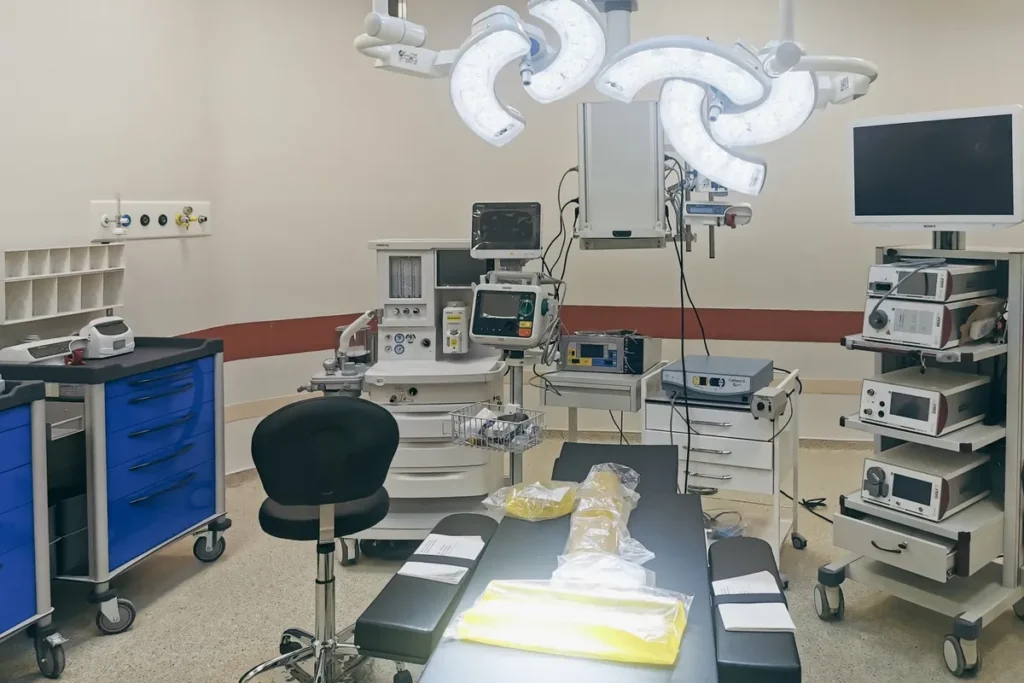
The same review says that surgery in poorly regulated settings, and key steps handed to unqualified people, have added to avoidable harm. In a 2025 survey by the International Society of Hair Restoration Surgery (ISHRS), members around the world said that about 10% of their repair cases followed an earlier illegal “black market” operation. That figure is what doctors reported and is not about one country.
We found no reliable published figure that compares the safety of hair transplants in Thailand with other countries.
How to check a doctor with the Medical Council of Thailand
The Medical Council of Thailand registers individual doctors. Its search accepts Thai or English names and has been reported to show licence status and recognised specialties. In 2026 the Council also began adding suspensions and revocations, without the reasons, so an entry can change.
- Ask the clinic for the full legal name of the doctor who will operate, in English and in Thai script, and for the licence number. A nickname is not enough.
- Go to the Council’s own site, tmc.or.th, and choose the doctor search. Its address has been reported as checkmd.tmc.or.th. Type it yourself; do not rely on a screenshot or link.
- Enter the first name and family name and search. Try the Thai spelling as well.
- Read the status and any suspension note. Compare the specialty shown with the one advertised. The page may not show every detail, so match the whole name and not only the number.
- If nothing appears, check the spelling and ask about a change of name. If there is still no match, contact the Council before you go further.
A Council rule in force since July 2026 says doctors promoting cosmetic services must show their full name and licence number. If a visiting foreign surgeon is offered, ask how they are permitted to work: the government portal says foreign doctors may not treat the public without special permission.
A valid entry shows that someone may practise medicine, not how many hair transplants they have done or how well. Those are questions to ask directly.

How to check a clinic licence
The clinic is checked separately from the doctor, by the Department of Health Service Support, part of the Ministry of Public Health. The licence to operate the facility lasts ten years, and the licence for running its services two years.
- Search online. The Department’s search page at hosp.hss.moph.go.th takes a clinic name or licence number. It is reported to show the address, licence type, operator, medical staff and current status.
- Match the address. The licence should be for the building where you will have surgery, not only for a sales office or a sister branch.
- Look on arrival. Department advice from 2021 says the sign should carry an 11-digit licence number that matches the licence displayed inside, and that the doctor’s name and photograph should be at the examination room.
- Ask if in doubt. If a clinic cannot be found, or its licence looks expired, the Department’s reported hotline is 1426.
A licence is a minimum, not a score. Do these checks on any clinic, including this one.
Who should do each step?
Ask for names against tasks. The ISHRS position is that diagnosis, planning, hairline design, donor harvesting and recipient site creation belong to a properly trained, licensed physician. It also notes that the law on delegation varies between countries.
| Step | What to ask |
|---|---|
| Examination and diagnosis | Which doctor will see me, and before or after I pay? |
| Hairline design | Can I see it drawn, and change it? |
| Anaesthetic | Who injects it, and who watches me afterwards? |
| Harvesting grafts | Does the doctor use the punch, or someone else? |
| Making recipient sites | Who makes the incisions? |
| Placing grafts | Who places them, with what training, and is the doctor in the room? |
Get the answers in writing.
Warning signs before you book
- You speak only to sales staff. The NHS advises people going abroad to meet the surgeon and to be careful with surgery sold as part of a holiday.
- Nobody will name the doctor, or the name keeps changing.
- The graft number is fixed from one photo, with no medical history taken.
- You are told nothing can go wrong, or offered a discount that ends today.
- You are not told that your hair loss may continue, or that you might not be a candidate.
Some people should wait or not have surgery at all, for example when a scalp condition is active or the cause of hair loss is not yet known.

What if something goes wrong after you fly home?
Make this plan before surgery. The NHS warns that overseas clinics may not provide follow-up, and that travel insurance does not normally cover surgery that goes wrong. Complaints and legal claims can also be harder from another country.
Infection after FUE usually appears in the first one to four weeks, when many visitors are already home. Before leaving Thailand:
- Get copies of your records, including the operation note and medicines given, translated if needed.
- Save a number that reaches the medical team, not only a sales chat.
- Tell your own doctor the date and type of surgery, and agree who will see you.
- Read the recovery guide.
Contact the clinic with photos about small worries. See a local doctor the same day for fever, spreading redness, pus, worsening pain, skin that turns dark or blistered, or bleeding that does not stop with gentle pressure. Trouble breathing or swelling of the face and throat is an emergency. In Thailand the local emergency number is 1669.
Common questions
Is hair transplant in Thailand good?
It varies from clinic to clinic, as it does everywhere. Judge the doctor, the plan and the aftercare, not the country.
Is it safe to get a hair transplant in Thailand as a tourist?
The operation itself is no different, but the trip adds practical risks: less time for a second opinion, a possible language gap, travel soon after surgery and follow-up from a distance. Allow spare days, as described on our travel page, and ask for the cancellation terms in writing.
Does accreditation mean a clinic is safe?
No. The US Centers for Disease Control and Prevention says accreditation is helpful but does not promise a good outcome. Still check the doctor and the licence.
Where can I complain about a clinic in Thailand?
Start with the clinic in writing. The Department of Health Service Support’s reported hotline is 1426, and the consumer protection board’s is 1166. Questions about a doctor go to the Medical Council.
Can I decide after one video call?
A doctor still needs to examine your scalp before confirming a plan. Use a consultation to ask for names, licence numbers and written answers, and take time to decide.
Sources
- Hair transplant, NHS
- Cosmetic surgery abroad, NHS
- Consumer alert, ISHRS
- 2025 practice census, ISHRS
- Complications in FUE, Frontiers in Medicine, 2026
- Medical Council doctor search, Post Today, 2026 (in Thai)
- Checking a doctor, Thai PBS, 2020 (in Thai)
- Check clinic licences online, Pattaya Mail with National News Bureau of Thailand, 2026
- Doctors must show real names, Pattaya Mail, 2026
- Department of Health Service Support checklist, The Bangkok Insight, 2021 (in Thai)
- Clinic licence renewal, Hfocus, 2026 (in Thai)
- Foreign doctors in Thailand, Royal Thai Government portal
- Medical tourism, US CDC
- Thailand travel advice: health, GOV.UK