
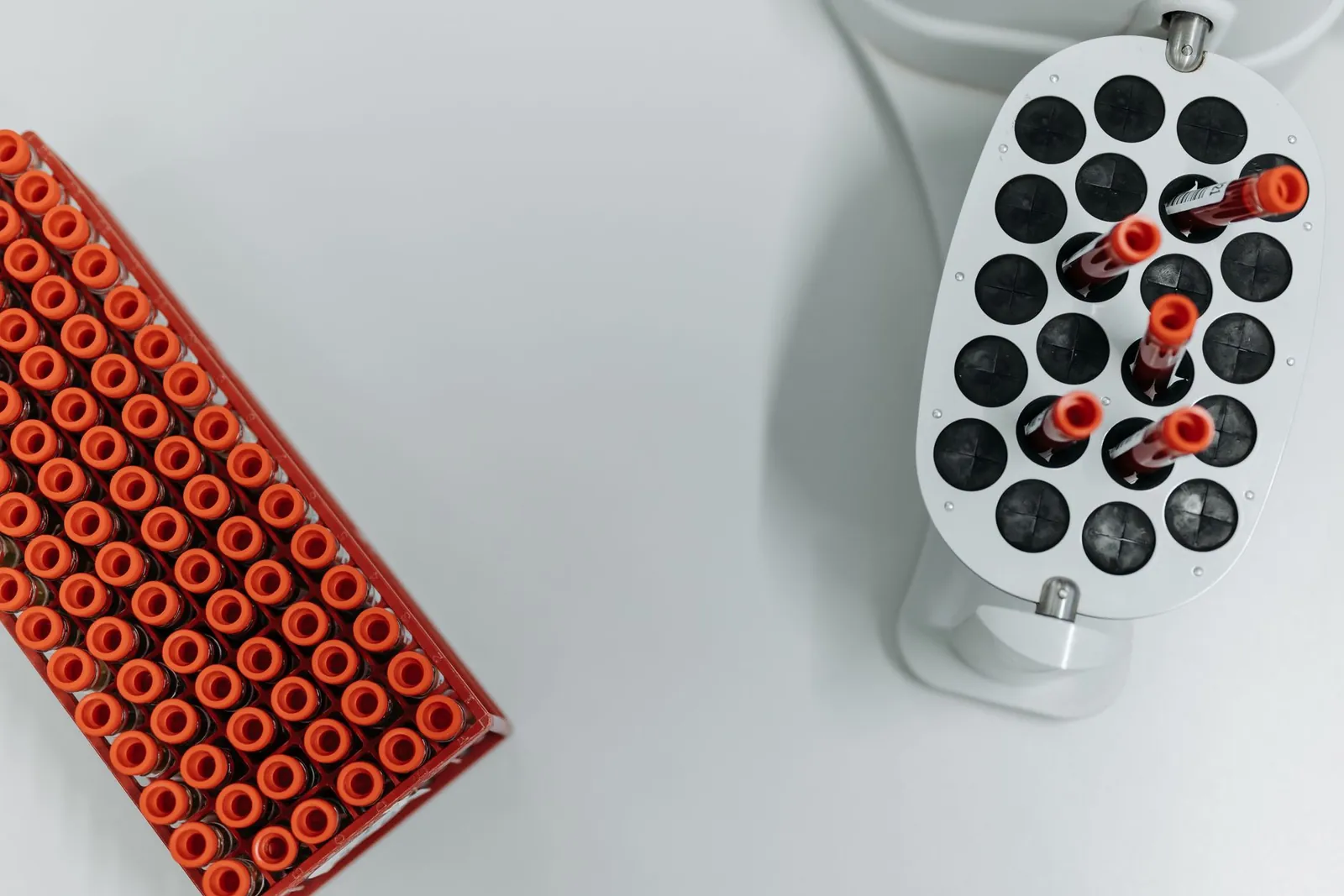
PRP hair treatment in Bangkok, as elsewhere, means taking a little of your own blood, concentrating the platelets, and injecting that liquid into thinning areas of the scalp. It may modestly increase hair density in some people with pattern hair loss, but trials disagree, the effect needs upkeep, and it is unlikely to help a bald area.
What is in PRP, and how it is given
PRP stands for platelet-rich plasma. Platelets are the part of blood that helps clotting and releases growth factors. The idea is that these signals encourage weak follicles, though the International Society of Hair Restoration Surgery (ISHRS) says the exact way it might help hair is not known.
- Blood is drawn from your arm.
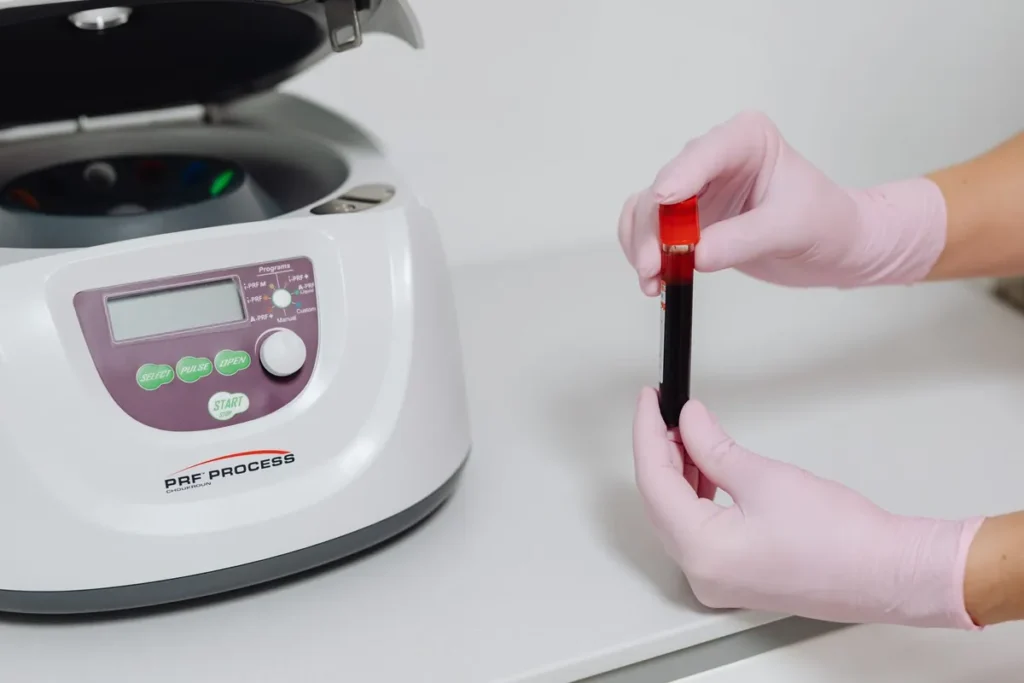
- The tube is spun in a centrifuge so the parts separate.
- The platelet layer is drawn off. Some methods spin twice, or add something to activate the platelets.
- Small injections are made across the thinning area.
Nothing is cut or moved, so it is not a transplant. The amount of blood, the spin and the platelet count also vary, and a review found no agreement even on whether to activate the platelets. That is one reason results are hard to compare.
What the evidence shows
Some pooled results are positive, and some careful trials found no difference from salt water.
| Study | What it found |
|---|---|
| Meta-analysis, 2023: nine trials, 238 people | Higher hair density than placebo at three and six months. Hair count and thickness were not significantly better than placebo. |
| Meta-analysis, 2024 | Density rose, thickness did not. Preparation differed between trials. |
| PRP added to minoxidil, 2024: five trials | Density was higher than with minoxidil alone, but the certainty was low to very low and the gain may be too small to matter. |
| Randomised trial, 2020: 35 people | Areas given PRP and areas given salt water both improved. The difference was not significant. |
| Randomised pilot, 2020: 30 men | Five PRP treatments alone did no better than salt water for hair growth. |
| Pilot in women, 2016 | No significant difference in hair measurements, although more women given PRP reported improvement. |
Expert bodies read this differently. The American Academy of Dermatology (AAD) says studies show it can be a safe and effective treatment. The British Association of Dermatologists says there is only limited research suggesting some benefit, and that results are unpredictable. The ISHRS says some studies have shown benefit and others have not, and that this use is off-label in the United States.
A fair summary is that a modest improvement is possible, and no one can tell you beforehand whether you will have it.

Who PRP may suit, and who should wait
The ISHRS says the more suitable candidates have thinning hair and not complete baldness. The trials above studied pattern hair loss, so they say little about other types.
It may be worth discussing if your loss is early, you have a clear diagnosis, and you can return for repeat visits.
Reviews and hospital advice list reasons to avoid or delay it, or to check first:
- A low platelet count, or platelets that do not work properly
- Treatment with blood thinners, or chronic liver disease
- An infection or active skin disease near the treatment area
- Anaemia, cancer, or a recent illness or fever
- Recent steroid treatment or anti-inflammatory painkillers
Tell the doctor about every medicine, including aspirin. Do not stop a prescribed medicine to have PRP unless the doctor who prescribed it agrees. Also say if you are pregnant, breastfeeding or planning a pregnancy, and wait if your hair loss has not yet been diagnosed.
How sessions are planned
The AAD describes injections about monthly for three months, then every three to six months. The ISHRS gives a similar pattern but says no interval is standard. Trials added to minoxidil used three to six monthly sessions.

If you are visiting from abroad, one trip is unlikely to be a full course. The ISHRS says benefits generally last only while treatment continues, so carrying on at home has to be realistic. Ask whether a doctor near you could do that, and take a note of how your PRP was prepared.
Agree at the start how it will be judged. Photographs in the same light and position, before the first session and again after some months, are more useful than memory. If nothing has changed by the agreed date, stopping is a reasonable decision.
Discomfort and side effects
Scalp injections hurt, usually briefly. Numbing cream, vibration or ice can help. The usual after-effects are discomfort, redness, swelling, itching and a mild headache, and most people can return to work the next day.
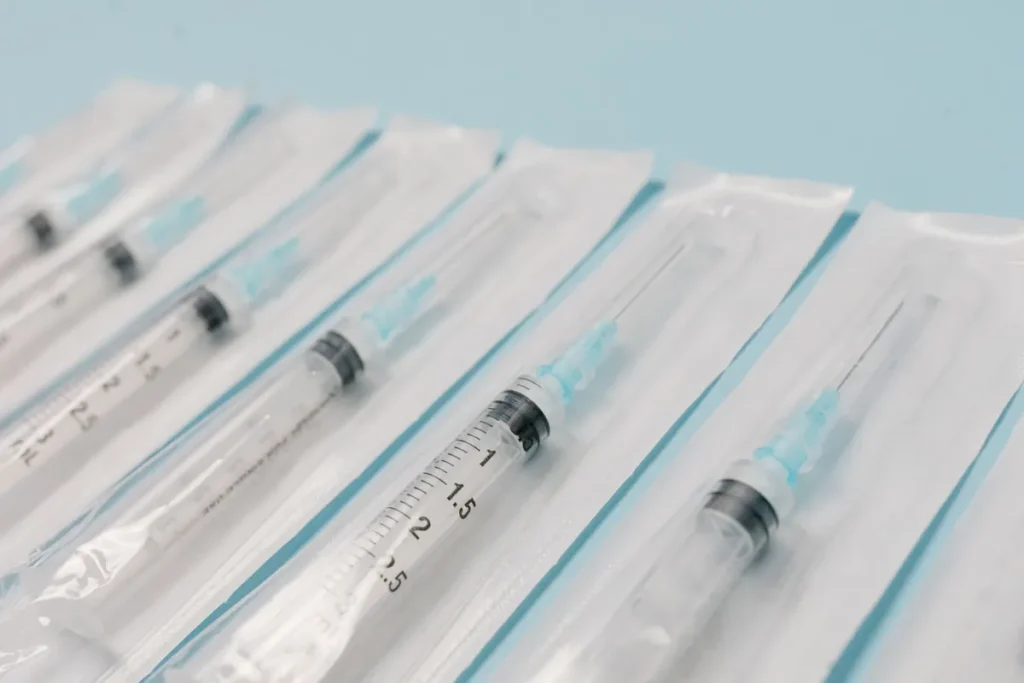
Because it is your own blood, PRP is considered generally safe, but infection, bruising, bleeding and soft tissue injury are possible. The tubes and needles must be sterile and used for you alone. Contact the clinic for pain that gets worse, spreading redness, pus, or bleeding that does not stop. With a fever, see a local doctor the same day.
What PRP cannot do
- It is unlikely to help skin that is already bald.
- It does not lower a hairline. Only a transplant moves hair to a new place.
- It does not treat thyroid disease, low iron, infection or scarring disease.
- It is not a proven replacement for medicine in pattern loss.
Some clinics add it to a transplant. A 2025 review found only three controlled studies, with 217 people in all. They linked PRP to better follicle survival and earlier regrowth, but used different methods, and the authors asked for better trials. Ask what would change if you had surgery without it.
What changes the cost of PRP
Prices are not listed here. These points change a quote, which should cover each one:
- The number of sessions, and whether you pay for them singly
- The size of the area
- The preparation system and tubes used
- Who gives the injections
- Blood tests, numbing and review visits
- Whether it is done alone or added to surgery
Compare the whole first year, including upkeep visits. Be wary of a long prepaid course with no review date, and of anyone who promises growth. You can ask for a consultation and a written quote, or read about other non-surgical hair loss treatment first. If you are weighing PRP against surgery, the FUE page shows what a transplant involves.
Common questions
Is PRP better than minoxidil?
That has not been settled. The trials that combined the two are small and their certainty is low, and they cannot tell you which is better alone. A doctor can help you decide whether to try one, both or neither.
How soon would I see a change from PRP?
Many trials measure results at three to six months. Early changes are hard to judge by eye, so compare photographs.
Can I have one PRP session while I am on holiday in Bangkok?
You can ask, but a single session is not how the main trials tested it. If you cannot continue elsewhere, it may be better to spend the visit on a diagnosis and a plan you can follow at home.
Is PRP the same as stem cells or exosomes?
No. PRP is a concentrate of platelets from your own blood. Stem cell and exosome products are different, and the clinic does not offer them.
Should I avoid painkillers before PRP?
Ask before your appointment. Recent use of anti-inflammatory painkillers is listed as a reason for caution, so some doctors ask patients to avoid them around treatment. Never stop a medicine prescribed for your heart, circulation or another condition without the doctor who prescribed it.
Read next
Sources
- Platelet-rich plasma, ISHRS
- Hair loss: diagnosis and treatment, American Academy of Dermatology
- Male pattern hair loss, British Association of Dermatologists
- PRP added to minoxidil, PLoS One, 2024
- PRP meta-analysis, Journal of Cutaneous Medicine and Surgery, 2023
- PRP meta-analysis, Aesthetic Plastic Surgery, 2024
- PRP randomised trial, Journal of the American Academy of Dermatology, 2020
- PRP pilot in men, Acta Dermato-Venereologica, 2020
- PRP pilot in women, Dermatologic Surgery, 2016
- PRP with hair transplantation: review, Cureus, 2025
- PRP in hair regrowth: review, Drug Design, Development and Therapy, 2022
- PRP for hair loss, Ohio State University