

DHI hair transplant recovery, day by day, looks much like recovery from FUE: a few days of swelling, scabs that loosen over about ten days, then shedding. The implanter pen changes how grafts go in, but the skin still has to heal, so the first two weeks need the same patience.
Use the days below as a map. Your written instructions from the clinic always come first, because healing varies and doctors differ on details such as the first wash.
Days 0 to 14 at a glance
| Day | What you may notice | What usually helps |
|---|---|---|
| 0 | Numb scalp, slight oozing | Go straight to your room. Keep hands off the grafts |
| 1 to 2 | Tightness, soreness, first swelling | Sleep with your head raised. Attend your wash visit if one is booked |
| 3 to 4 | Forehead or eyelid swelling, tiny scabs | Rest and avoid bending. Wash only as you were shown |
| 5 to 7 | Swelling fading, itching | Do not scratch or pick. Keep washing gently |
| 8 to 10 | Scabs loosening, short stubble | Ask before you rub at any scab that is still attached |
| 11 to 14 | Pinkness, fewer scabs, perhaps the first hairs falling | Have your check. Ask about hats, exercise and normal washing |
Day 0: the evening after surgery
The local anaesthetic wears off over the following hours. Take only the medicines the clinic gave or approved, in the way it wrote down. Eat, drink water and rest. Arrange a lift, because you should not drive.

Set up your pillows before you lie down. They should support you without the grafted area touching anything. The back of your head, where follicles were removed, may be sore against the pillow.
Days 1 to 4: swelling and the first wash
A 2026 review of complications puts swelling at onset on day 1 or 2, a peak at days 2 to 3 and an end by days 5 to 7. An older paper describes forehead and eyelid swelling around days 4 to 5. So eyelids that look puffier on day 4 than on day 2 are not automatically a bad sign, though you should still send a photo. StatPearls suggests sleeping with the head of the bed raised 15° to 30° for the first week.
When is the first wash? Good sources disagree. StatPearls says 24 hours, without rubbing. The 2026 review recommends gentle cleansing within the first three days. The NHS says you should be able to wash gently by hand at day 6. Use your own clinic’s day, since it knows how your grafts were placed and whether you have a dressing.
Once you start, be gentle and keep it simple:
- Wash your hands.
- Let lukewarm water trickle over the grafts, with no strong jet.
- Lay on the mild shampoo or foam the clinic advised. Do not rub.
- Rinse the same way and let the grafted area dry without a towel.
Avoiding washing out of fear is common. In interviews with 16 patients, the researchers described people not daring to shampoo. Ask for a repeat demonstration if you are unsure.
Days 5 to 10: scabs and itching
Small crusts form around each graft. The 2026 review says they appear within 2 to 3 days and clear by 7 to 10 days with proper care. Itching often starts between days 3 and 7, according to the same paper.
The scab is the part to respect. In a small study, pulling an attached scab removed grafts through day 5, and grafts were no longer at risk by day 9. A separate review says grafts become secure between days 6 and 9, while the NHS asks for great care for two full weeks. Picking has no upside on any of these timelines. Let washing soften the scabs until they fall.
If your head was not fully shaved, existing hair can hide scabs. Part it gently and photograph the area in good light. Send the picture before you decide anything is stuck.
Days 11 to 14: looking normal, not yet finished
Many people feel well by now, so it is easy to get careless. Ask about caps, the gym, swimming, sun and haircuts one by one. A yes to one does not cover the rest. If scabs are still there beyond two weeks, the 2026 review advises that they be evaluated.
Shedding after day 14
The transplanted hair usually falls out, and this is expected. The American Academy of Dermatology gives two to eight weeks after surgery and says that by month three the hair may look thinner than before. New growth follows over months. Our recovery page sets out the longer timeline.
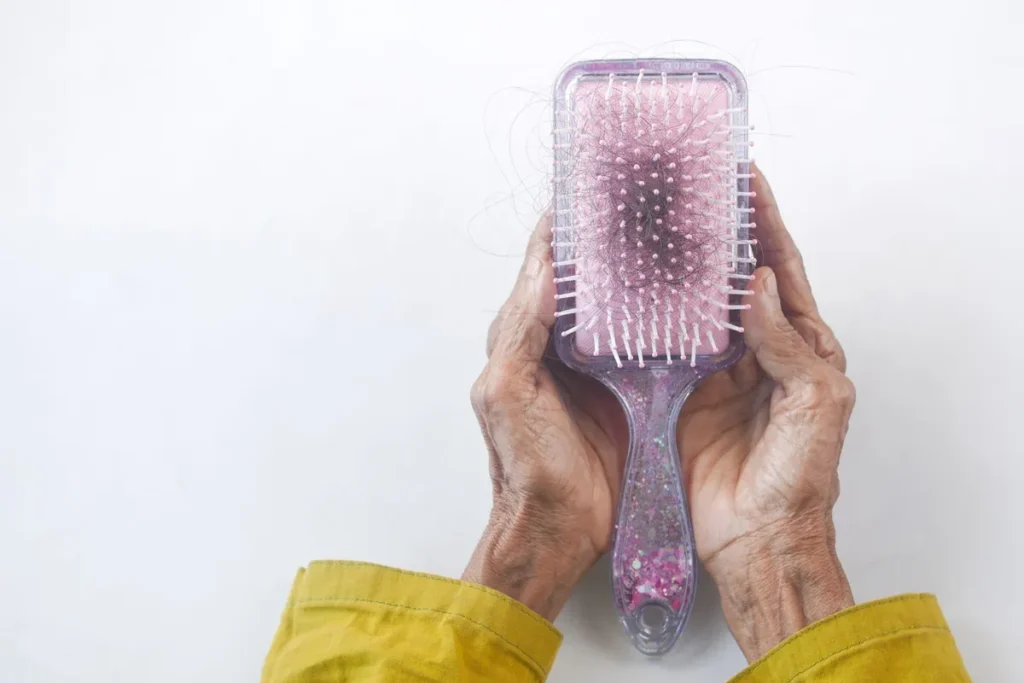
Some hair around the treated areas can shed too, and numbness can last from days to a few months, or longer in some people.
DHI and FUE recovery: what differs, what does not
| Question | What we can say |
|---|---|
| Donor area | No difference. Follicles are removed the same way |
| Recipient area | The pen makes the site and places the graft together; in standard placement the sites are made first |
| Bleeding during placement | Pen placement is susceptible to bleeding because cutting and inserting happen at once |
| Depth | Sites that are too deep may cause folliculitis (inflamed follicles); a pen guide warns of the same problem and of scarring |
| Shaving | With DHI, sometimes only the donor area is shaved |
| Speed of healing, scabs, shedding | In our search we found no good trial showing that DHI is faster |
You may read that DHI has a shorter recovery. Ask anyone who says so for the study. The size of the session, your skin and your aftercare are likely to matter at least as much as the name.
When to call the clinic
Call us, or see a doctor, the same day if you have:
- Fever or chills
- Redness that spreads, pus, or pain that is getting worse
- Skin that turns dark, or thick, black or honey-coloured crusts, which can be signs of poor blood supply or infection
- Bleeding that does not stop with gentle pressure
- Swelling that closes an eye, or any change in your vision
Trouble breathing, or swelling of the face and throat, is an emergency. If you are back home, tell the local team you have had a scalp procedure and show them your notes.
Small pimples can appear in weeks 1 to 4. Send a photo and do not squeeze them.
To ask what your own two weeks might look like, book a consultation before choosing dates.
Common questions
What is the DHI hair transplant recovery time?
Plan for about two careful weeks, with redness or numbness lasting longer in some people, and a wait of many months for the result. The NHS suggests you may need 1 to 2 weeks off work.
Is a little bleeding on the pillow normal?
Slight spotting on the first night can happen. Press gently with clean gauze if a spot keeps oozing, and call if it does not stop.
A scab came off with a hair in it. Is the graft gone?
Not necessarily. Transplanted hair shafts shed while the root stays in the skin. If there was fresh bleeding, especially in the first week, take a photo and contact the clinic. Do not pull another one to compare.
Can I use a hat to hide the scabs?
Only after the clinic allows it, and it must be loose and clean. A tight cap can press on scabs or drag them when you take it off.
Sources
- Complications in follicular unit excision hair transplantation: current evidence and practical approaches, 2026, PMC
- A practical guide to hair graft placement using the sharp implanter method, 2023, Dove Press
- Hair transplant, NHS
- Hair transplantation, StatPearls, NCBI Bookshelf
- Follicular unit extraction hair transplant review, PMC
- Recipient area, Journal of Cutaneous and Aesthetic Surgery, 2018, PMC
- Graft anchoring in hair transplantation, Dermatologic Surgery, 2006
- Self-management in the post-hair transplantation recovery period, PMC
- Hair transplant, American Academy of Dermatology